From Defense to Commencement to an International Move: A Whirlwind 2026


2026 will be a year for the books. This is the year I defended my Ph.D. and graduated from one of the top environmental engineering programs in the United States, one of the most challenging but rewarding experiences of my life. I published my first lead author manuscript in JGR Atmospheres, met two climate leaders who have inspired me since my undergraduate years, and moved to Ireland, two cats and a husband in tow, to begin a Postdoctoral Research Fellow position at University College Dublin.
With all of these changes, I am excited for what comes next in my career. In this blog post, I will share a birds-eye view of the final stages of my Ph.D. and the whirlwind that followed, with the hope it will give current Ph.D. students some insight as to what life can look like at the light at the end of the tunnel.
December 2025: December kicked off with excitement when one of my close colleagues Dr. Laura Gray successfully defended her Ph.D. Dr. Gray, Dr. Erin Emme, and I were all scheduled to defend our Ph.D.s within a couple months of one another, and we became each other’s support group, writing buddies, and accountability partners throughout the process. We met for coffee almost every day to work, write, and support one another. To anyone in a Ph.D. program, I cannot emphasize the importance enough of having supportive colleagues who understand what a Ph.D. entails and supports you in achieving your goals.
Later that month, we all headed to New Orleans, LA for the AGU 2025 Fall Meeting. I will expand more fully on the meeting in a future blog post (still currently in my drafts folder, but as the Irish say, ah shur look), but some highlights included presenting my research during the Oral Session “Computational Methods and Tools for Air Quality Exposure Assessments and Solutions,” and meeting one of my climate heroes Dr. Michael Mann, after running into him in a coffee shop. Dr. Mann is a climate scientist and communicator, famous for creating the “hockey stick graph” showing average annual temperatures in the Northern Hemisphere over the past 1000 years. In addition to admiring his science, I have always admired his bravery and integrity in speaking out on the climate crisis despite political pressures.
January 2026: January was a fairly quiet month, where I spent most of my time working on manuscripts and my dissertation.
February 2026: In February 2026, Dr. Erin Emme successfully defended her Ph.D. Dr. Emme was the first to defend her research in the Horowitz Research Group, so it was a big deal for the whole team. While I was the first to join as a Ph.D. student to join the Horowitz Group, she was the first member having joined as an undergraduate researcher. She did an amazing job, especially after having to push forward her defense date after accepting a prestigious Postdoctoral Research Associate position at the University of Colorado Boulder. Her research focused on the emissions and climate impacts of sea salt aerosols from both natural and engineered sources.
February also brought several opportunities to connect with people working at the intersection of climate science, communication, and advocacy. Distinguished Professor Katharine Hayhoe from Texas Tech University gave a seminar at UIUC in February, and it was incredibly in inspiring to meet her. In addition to being a brilliant climate scientist, she is an exceptional science communicator. I admire how she draws on her faith-based background to connect with audiences who may not traditionally engage with climate science and build relationships that create space for conversations about climate change.
I also attended and volunteered at weSTEM, GradSWE’s flagship conference, where I met inspiring women with STEM graduate degrees working in fields ranging from academia to nonprofits to governmental institutions to private industry. One highlight was meeting Dr. Gretchen Goldman, Director of the Union of Concerned Scientists, and hearing her message of hope and successful advocacy despite the challenging political environment for science in the United States since Trump’s second term in office.
Horowitz Research Group with DR Emme Professor Hayhoe! weSTEM 2026
March 2026: Two weeks after Dr. Emme’s defense, it was my turn.
I was incredibly nervous, but ultimately enjoyed the opportunity to present six years of work to my family, friends, and professional colleagues. At UIUC, a Ph.D. defense typically involves submitting your dissertation to your committee two weeks before a 45-minute oral presentation that is open to the public. After the presentation, members of the public can ask questions before they are dismissed for the committee to ask questions in a closed-door setting. At the end of the questioning, the committee decides whether to pass, pass with required revisions, or fail the student. I was fortunate enough to pass with no revisions. My research spanned three interconnected topics: (1) uncertainties in model representation of particulate matter air pollution, (2) comparing near-real-time and standard aerosol optical depth (AOD) satellite retrievals and their applicability to scale model results, and (3) interdecadal relationships between urban heat and urban pollution across North America.
Dr. Gray, Dr. Clarizio, and Dr. Emme Grateful for my support network My committee
April 2026: April was my break month after a very hectic start to the year. I travelled to Hawaii for a friend’s wedding and Michigan for a family baby shower. I received feedback on a lead-author paper I had submitted to JGR Atmospheres, which was accepted pending revisions. I also began organizing for my move to Ireland, looking at rental accommodation and confirming the project I would work on with my now advisor Prof. Francesco Pilla.
May 2026: May was an extremely busy month, with commencement week involving ceremonies for my doctoral hooding, university-wide graduation, and engineering college graduation. Right after graduation, we flew to Ireland to attend a family wedding and finalize our accommodation. I also found out that another lead manuscript I had submitted was rejected. It was disappointing, but I was proud to have developed the mental resilience and experience to recognize rejection is simply part of academia. My advisor and I made plans to seek out additional feedback so that we could strengthen the paper and resubmit it.

June 2026: June was mainly about moving. We had to clear out our entire apartment, get our cats their EU medical travel certificates, and somehow do all this with no air conditioning during a heat wave! Amidst all this, we had to travel to St. Louis for more family wedding activities. But eventually, we safely arrived to Ireland, cats healthy and happy (well they are happy now—definitely not during the travel).
July 2026: During July, I finished revisions for my manuscript for JGR Atmospheres and re-submitted, which was published soon thereafter (read here). I was also delighted that my colleague Mashiat Hossain’s paper was published in ES&T Air, where I am a co-author. Her paper shows the impact of wildfires including transboundary smoke on air pollution in the United States. At the end of July, I officially started my postdoctoral position.
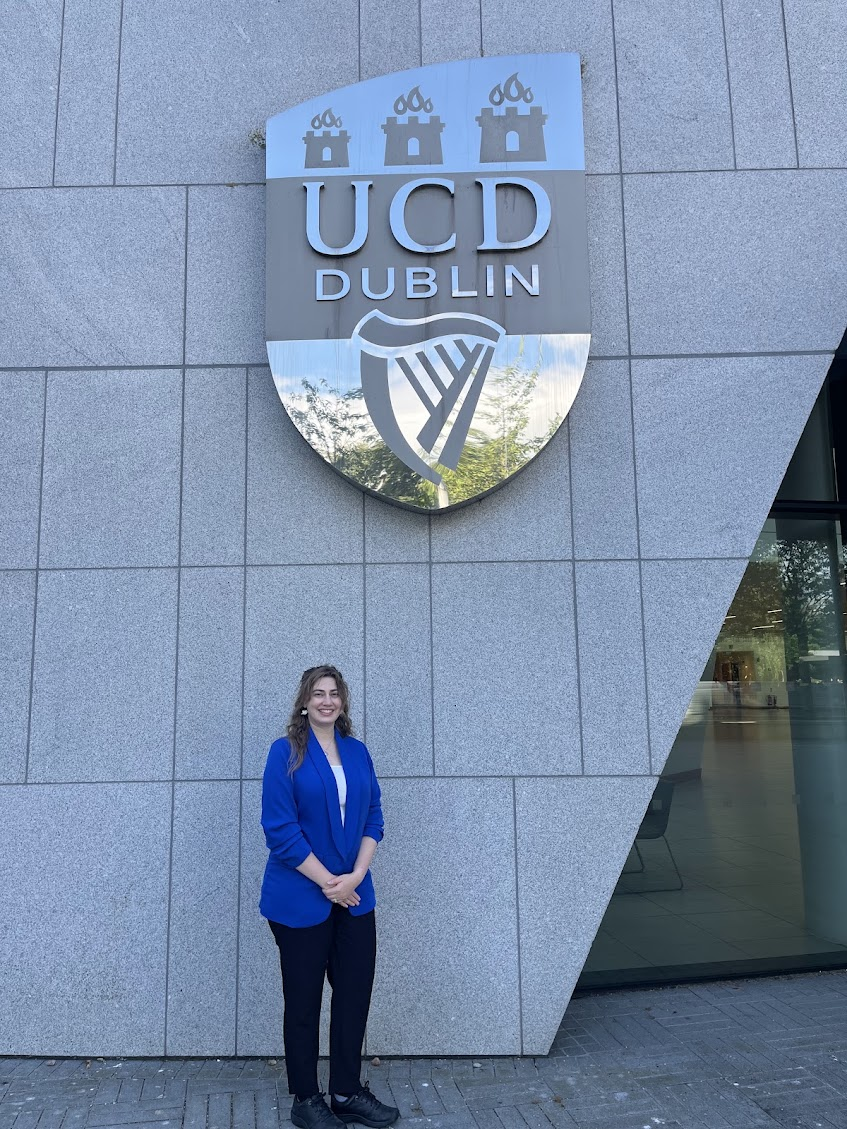
August 2026: August was all about getting up to speed on my postdoctoral project
through project orientation and meetings. I am involved in the STEER-NWE project, which promotes electric carsharing across Northwest Europe. I am working alongside my advisor and Fingal County Council to deliver and compare commercial vs community-led models. I am also worked revising the manuscript that was rejected from my Ph.D. work and drafting an additonal manuscript on my final Ph.D. project.
September 2026: Now, with the semester poised to start this week, things are about to get in full swing. I am excited to travel to meetings across Europe, teach in classes, and really delve into the community-engagement side of my research. After six years of graduate school, a cross-Atlantic move, a new research position, and a lot of change, I am looking forward to seeing where this new chapter takes me. And, if I am lucky, maybe I’ll even find the time to get back into my regular blog posts about life in academia 😊
It is hard to believe all that has happened in the past year (or six months even). To those currently working toward a Ph.D., I hope this gives some insight into the final months of graduate school and the next steps that come afterwards, while also providing some relatability to the hectic nature that is Ph.D. life. I hope you realize that a rejection of a single paper does not mean you are a failure—something I may have felt as a more junior student. Rejection is an integral part of academia—most people with Ph.D.s I know have had papers rejected, even if they do not talk about it. There will be papers that are rejected, funding opportunities you are not successful in, and ideas that do not work out. But those setbacks do not take away from the things you are successful in. You are capable and you can do it. What matters is that you just keep going and persisting, even when it seems impossible. And perhaps most importantly, support one another and seek out support from others. I certainly would not have made it through graduate school without the colleagues, friends, mentors and family who supported me along the way.


Comments